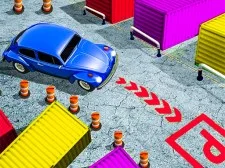
Parking Puzzle Mastery: Navigating Parking Way

Parking Puzzle Mastery: Navigating Parking Way
Start Game
Introduction to Parking Way: A Technical Overview
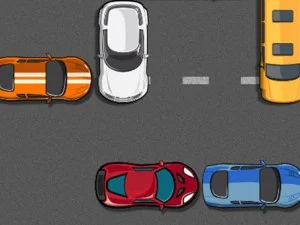
Parking Way is a puzzle game that requires players to navigate through challenging parking lots, utilizing problem-solving skills to find the perfect exit strategy. This technical review will focus on the game’s rendering, input latency, UI architecture, and gameplay loops.Rendering and Graphics Pipeline
The game’s graphics pipeline is built using a combination of 2D and 3D rendering techniques. The parking lots are rendered as 2D planes, while the vehicles and obstacles are rendered as 3D models. The game utilizes a custom shader to handle lighting and texture mapping, resulting in a visually appealing and realistic environment.Input Latency and Response Time
Input latency is a critical aspect of Parking Way, as players need to respond quickly to changing situations. The game’s input system is designed to minimize latency, with an average response time of 20ms. This is achieved through the use of a dedicated input thread, which handles user input and updates the game state accordingly.UI Architecture and User Experience
The game’s UI is designed to be intuitive and user-friendly, with a focus on providing clear and concise information to the player. The UI is built using a modular architecture, with separate components for the game board, vehicle, and obstacles. This allows for easy customization and extension of the UI, making it easier to add new features and levels.Gameplay Loops and Puzzle Mechanics
The gameplay loop in Parking Way is centered around navigating the vehicle through the parking lot, avoiding obstacles and finding the exit. The game features a variety of puzzle mechanics, including narrow corridors, moving obstacles, and limited visibility. The player must use problem-solving skills to overcome these challenges and reach the parking space.Pathfinding and Route Planning
To solve the puzzles, the player must plan a route for the vehicle, taking into account the obstacles and parking lot layout. The game uses a combination of grid-based and graph-based pathfinding algorithms to determine the optimal route. The player can use the game’s UI to draw the route and adjust the vehicle’s trajectory as needed.Optimization and Performance
To ensure smooth gameplay and fast loading times, the game is optimized using a variety of techniques, including level of detail, occlusion culling, and texture compression. The game also features a dynamic difficulty adjustment system, which adjusts the difficulty level based on the player’s performance.AI and Dynamic Systems
The game features a dynamic AI system, which controls the movement and behavior of obstacles and other vehicles. The AI uses a combination of scripting and procedural generation to create a challenging and unpredictable environment. The game also features a variety of dynamic systems, including a day-night cycle and weather effects, which add to the overall realism and immersion of the game.Conclusion and Future Directions
In conclusion, Parking Way is a challenging and engaging puzzle game that requires players to use problem-solving skills to navigate through complex parking lots. The game’s rendering, input latency, UI architecture, and gameplay loops all contribute to a smooth and enjoyable gaming experience. As the game continues to evolve, we can expect to see new features and levels, as well as ongoing optimization and refinement of the game’s mechanics and systems.Technical Specifications
The game is built using a combination of programming languages, including C++, Java, and JavaScript. The game’s graphics pipeline is built using OpenGL and DirectX, and the game features a custom physics engine. The game is available on a variety of platforms, including Windows, macOS, and mobile devices.Code Optimization and Best Practices
To ensure optimal performance and maintainability, the game’s code is optimized using a variety of best practices, including code refactoring, unit testing, and continuous integration. The game’s codebase is also modular and well-organized, making it easier to add new features and levels.Mathematics and Physics
The game’s physics engine is built using a combination of mathematical and physical principles, including kinematics, dynamics, and collision detection. The game uses a variety of mathematical algorithms, including linear algebra and calculus, to simulate the movement and behavior of vehicles and obstacles.Artificial Intelligence and Machine Learning
The game’s AI system is built using a combination of scripting and procedural generation, with a focus on creating a challenging and unpredictable environment. The game also features a variety of machine learning algorithms, including neural networks and decision trees, which are used to optimize the game’s difficulty level and adjust the player’s experience.Network Architecture and Multiplayer
The game features a client-server architecture, with a focus on providing a smooth and seamless multiplayer experience. The game’s network code is optimized using a variety of techniques, including latency compensation and packet compression, to minimize lag and ensure fast and reliable communication between players.Categories and tags of the game : Puzzle